
Brain MRI: Understanding Your Results and Next Steps
Stroke, infection and many other conditions can cause a wide range of symptoms. You may begin acting or thinking differently, or develop problems with speaking, hearing or seeing. To find the source of your problems, your provider may prescribe a brain magnetic resonance imaging (MRI) scan.
Compared to X-ray and computed tomography (CT) scans, MRI produces clearer images of the brain, aiding in diagnosis and treatment planning.
As an added bonus, MRI doesn’t expose you to radiation. Instead, it creates thin images called slices with strong magnets and radio waves. Because of this, the National Institutes of Health considers MRI the “imaging module of choice” when performing repeat scans of the brain.
Here’s what MRI images of your brain may show and what to do with your results.
What an MRI of Your Brain Shows
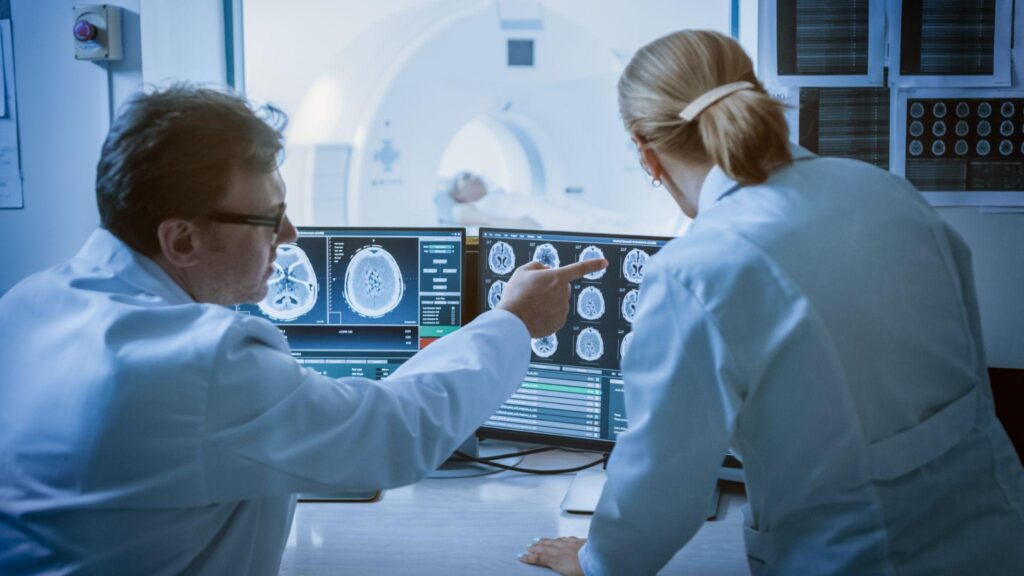
An MRI machine produces black-and-white images, with abnormal areas appearing darker or lighter than normal tissue. This allows radiologists to differentiate between healthy and unhealthy brain tissue.
During your exam, the MRI scanner’s strong magnetic field produces detailed images of the brain. The image slices are then stacked into three-dimensional pictures to see the shape, size, and density of brain tissue.
Once an abnormal area is identified, the radiologist collaborates with other healthcare providers to determine the best course of action.
A few conditions a brain MRI can help detect include:
- Bleeding
- Infection
- Inflammation
- Lesions (damaged tissue)
- Structural abnormalities
- Swelling
- Traumatic injury
- Tumors
Additionally, a brain MRI can show stroke damage and the cause of seizures or headaches. Repeat MRIs even show changes in the brain’s size and shape that occur commonly in Alzheimer’s disease.
Potential Results of a Brain MRI
Your brain MRI will produce unique results, based on what is affecting your brain. In general, your results are either normal or abnormal.
A normal MRI indicates that your brain looks as it should — healthy and typical. You receive abnormal results if your provider notices anything that is not as it should be.
Fortunately, many abnormal findings are benign. These abnormalities may not cause symptoms or pose a risk to your health.
Two common benign findings of brain MRIs are:
- Bleeding. As you age, you may develop small bleeds in the brain that do not cause damage or noticeable symptoms.
- Cysts. These growths are filled with air, tissue, pus or fluid, and they’re rarely cancerous, according to the American Cancer Society . Cysts can develop in various parts of the brain and may grow over time.
When a brain MRI uncovers more serious abnormalities that cause symptoms or put your health at risk, your care team develops a plan to address the problem and improve your quality of life.
Depending on your test results, your provider may prescribe one or more of the following:
- Additional imaging tests to rule out or confirm a diagnosis
- Biopsy to confirm or rule out a cancer diagnosis
- Treatment, which may include medication, therapy, surgery or other care options
Understanding Your MRI Results
Following a brain MRI, the radiologist will review your images and discuss them with your provider. One of them will then explain the results to you and provide an opportunity to ask questions.
To take advantage of your provider’s expertise, bring questions to your imaging appointment.
Questions that can help you understand your exam results include:
- Did you find anything abnormal or troublesome in my exam?
- How do these findings connect to my symptoms?
- Can you make a diagnosis based on the test results?
- Will I need treatment or continual monitoring in the future?
- What do these results mean for my health moving forward?
If you require treatment, good questions to ask include:
- What treatment options are available, and what treatment do you recommend?
- What are the potential side effects of treatment?
- When can treatment begin, and how long will it take to determine if it works?
- How much experience do you have treating this condition?
- Are there lifestyle changes I can make to improve my condition?
- Where can I learn more about my condition?
If your provider uses medical language you don’t understand, ask for clarification. After all, you’re the main player on your care team.
Brain MRI Scans: What to Know
Diagnosing conditions that affect your brain requires expertise and advanced technology. Your provider may recommend a brain MRI to identify underlying issues causing symptoms or putting your health at risk.
An MRI produces black-and-white images of your brain. The resulting images are used for diagnosing bleeding, tumors and more.
Based on the results of your brain scan, you may require additional testing or treatment. Some benign conditions don’t require immediate medical care.
Your care team will explain the results of your brain MRI. Make sure you understand what they say and ask questions to stay informed and empowered to take the next step in your care.
Did your provider order an MRI for you? Call (520) 733-7226 or request an appointment online with Radiology Ltd. for your brain MRI.